 Port St. Lucie Leak Detection
 Underground Pool Plumbing Leak Repair in Port St. Lucie
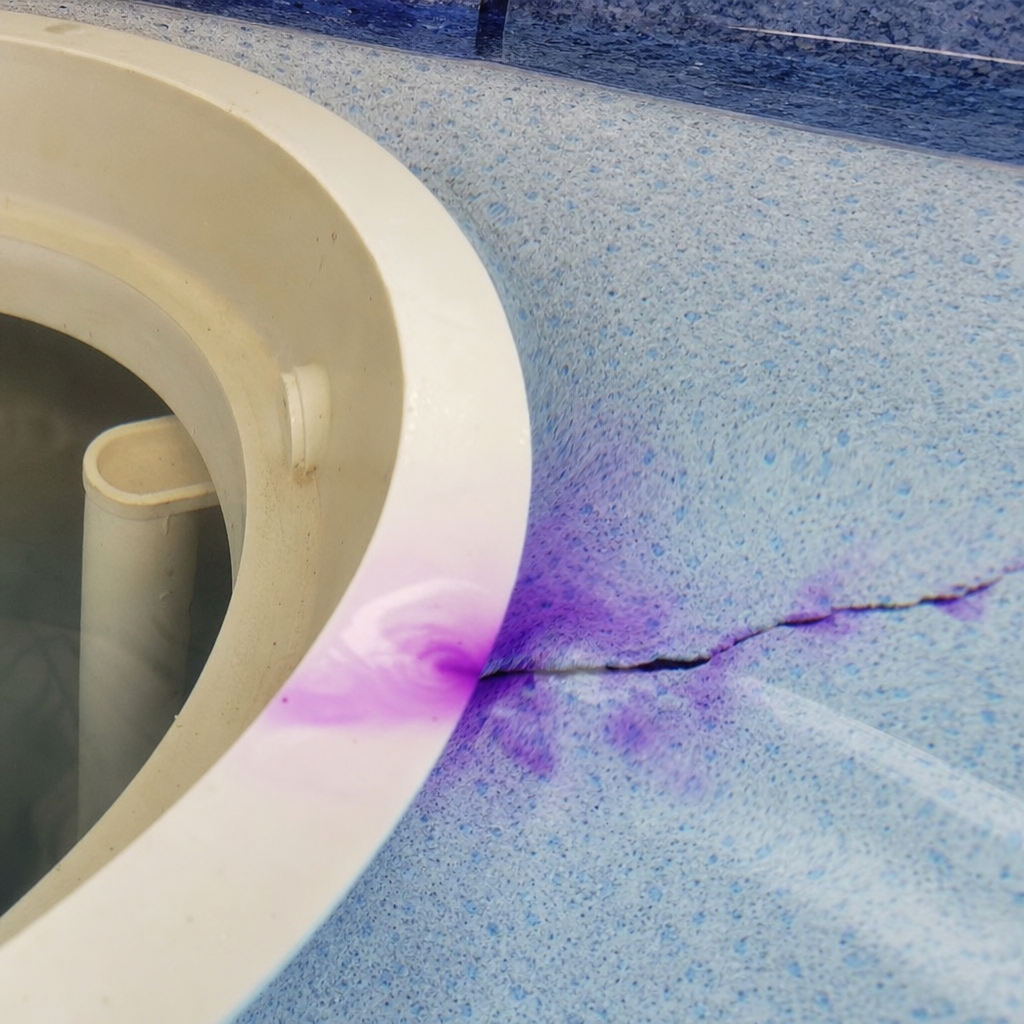
Underground pool plumbing leak repair means finding the exact break in a buried suction or return line and fixing it through one clean, pinpointed opening, not tearing up half the deck to hunt for it. In Port St. Lucie these repairs run $500–$1,500+ depending on depth, deck cutting, and how much pipe gets replaced, always quoted in writing after pressure testing and acoustic pinpointing have located the break.
Underground leaks are the ones owners fear most, because the pipe is invisible and the horror stories involve jackhammers. The reality, done properly, is closer to surgery: isolate the failed line from the equipment pad, listen the break down to a spot the size of a dinner plate, open that spot, fix the pipe, restore the deck.
How buried lines fail in Port St. Lucie soil
Your pool’s plumbing (skimmer line, main drain, returns, spa lines, maybe a cleaner line) runs underground between the shell and the equipment pad, mostly in rigid PVC glued at fittings. Around here, three forces work against it:
Sand settles. Practically every pool in the city sits in fine coastal sand, from the original GDC-platted quarter-acre lots on the east side to the engineered fill under Tradition and Verano. Sand doesn’t hold trench compaction forever. As it consolidates, buried pipe moves fractionally, and the stress concentrates at glued fittings, elbows and couplings near the pool wall and the pad are the classic failure points. Pools from the mid-2000s boom are deep in this window now; the 2020s builds are just entering it.
Water erodes sand fast. Once a joint weeps, escaping water carries sand away from the pipe, the pipe loses support, flexes more, and the weep grows. This feedback loop is why underground leaks accelerate and why the ground eventually tells on them: a soggy patch, a suspiciously green stripe of lawn over the pipe run, pavers sinking near the deck edge.
The water table pushes back. For part of the year, groundwater sits high enough that a depressurized suction line can actually draw dirty groundwater in through a break, one reason a pool with an underground leak sometimes shows unexplained cloudiness or debris along with the loss.
And the local twist that hides all of it: autofill valves. The level never drops, so the first visible symptom is usually the City of Port St. Lucie or St. Lucie West Services District bill, tiered water plus sewer riding on the same meter. By the time an autofill pool’s underground leak is noticed, it has often been running for months.
Suction side vs. pressure side: the symptoms differ
Suction-side leaks (skimmer and main drain lines, pool-to-pump) let air in when the pump runs: bubbles blowing from the return jets, a pump basket full of air, a pump that struggles to hold prime, sometimes a system that loses prime overnight. These lines may barely leak water when the pump is off, which is why the bucket test’s pump-on/pump-off comparison (steps on the FAQ page) is so diagnostic.
Pressure-side leaks (pump-to-pool returns, spa returns) push water out whenever the pump runs. Loss that spikes during filtration hours, wet ground near the pad or along the return runs, and deck settling are the tells.
Either way, the pressure test doesn’t guess: each line is plugged and pressurized individually at roughly 20 PSI, sound lines hold, and the failed line bleeds down in front of you.
The repair, step by step
- Confirm and pinpoint. The failed line from detection gets re-pressurized and traced with acoustic listening equipment through the deck or lawn to the break, typically within inches.
- Open the spot. One opening at the pinpointed location: pavers lifted and set aside, or a minimal saw cut in concrete. Inside a screened cage, which is most Port St. Lucie pools, the screens get protected, the dust contained, and debris hauled out the door.
- Fix the pipe. Cut out the failed section or fitting, replace with new PVC properly primed and glued, and support it correctly in compacted material so the same settling stress doesn’t repeat.
- Re-test before closing. The repaired line gets pressurized again and must hold before anything is backfilled. No line closes up on faith.
- Restore. Backfill compacted in lifts (loose sand settles: the whole lesson of this page), pavers relaid or concrete patched, and any leak-eroded void under the deck filled while the deck is open.
Most jobs run one to two days including deck restoration. The quote you approved beforehand, per the published pricing, covers all of it in writing.
What drives the $500–$1,500+ range
- Depth and location. A shallow break in open lawn is the low end. A deep break under a concrete deck inside a cage is the high end.
- Deck material. Pavers are cheap to open and invisible to restore. Stamped concrete costs more and never matches perfectly, which should be said up front.
- How much pipe. A single failed coupling is quick; a line crushed or degraded along a run means replacing footage.
- Erosion damage. A long-running leak can wash out enough sand that filling and compacting the void becomes part of the job. This is the “waiting costs money” line item, leaks found early rarely have it.
If a line is too damaged along its length to be worth splicing, the straight answer is pricing a reroute rather than nickel-and-diming repairs into a bad pipe.
Not sure it’s the plumbing?
Underground lines are one suspect among several, the skimmer joint and the light conduit are actually more common finds on local pools. That’s exactly why the flat-fee detection visit tests everything before anyone talks repairs. Start there, or run the bucket test first and have the numbers ready. We cover all of Port St. Lucie plus Fort Pierce, Jensen Beach, Stuart, and Palm City.
Frequently Asked Questions
How do you find a broken pipe under a concrete deck without digging everything up?
Two steps: pressure testing isolates which line is losing water (each circuit is plugged and pressurized at about 20 PSI, and the one that bleeds down is the problem) then acoustic listening gear traces the pressurized escape sound through the deck to pinpoint the break, usually within inches. Then one cut goes in at that spot instead of trenching on a hunch.
How much does underground pool plumbing repair cost?
Typically $500–$1,500+, always quoted in writing after the break is pinpointed. The range is driven by depth, whether it means cutting concrete or lifting pavers, how much line has to be replaced, and whether the leak eroded soil that needs to be filled and compacted.
Air bubbles come out of my return jets and the pump loses prime. Is that an underground leak?
Those are classic suction-side symptoms. The pump is pulling air through a break or bad fitting in the skimmer or suction plumbing. It's one of the most reliable leak signs there is. The pressure test will confirm which line, and the fix is usually a targeted pipe or fitting repair.
Is the wet spot in my yard a sinkhole?
Almost certainly not. True sinkholes are rare on the Treasure Coast. The local sand sits over deep limestone, not the shallow karst that swallows things in Central Florida. A wet spot, a green stripe of grass, or settling pavers near a pool is nearly always an underground plumbing leak eroding sand. That's a fixable, quotable repair, not a catastrophe.
Will my deck look the same after the repair?
Depends on the deck. Pavers lift and go back nearly invisibly, the best-case material, and common here. Broom-finish concrete gets a clean patch that's visible up close. Stamped or decorative concrete never matches perfectly, and you should hear that before cutting, not after. The cut location is pinpointed first, so it's one opening, as small as the job allows.