 Port St. Lucie Leak Detection
 Pool Leak Detection in Port St. Lucie
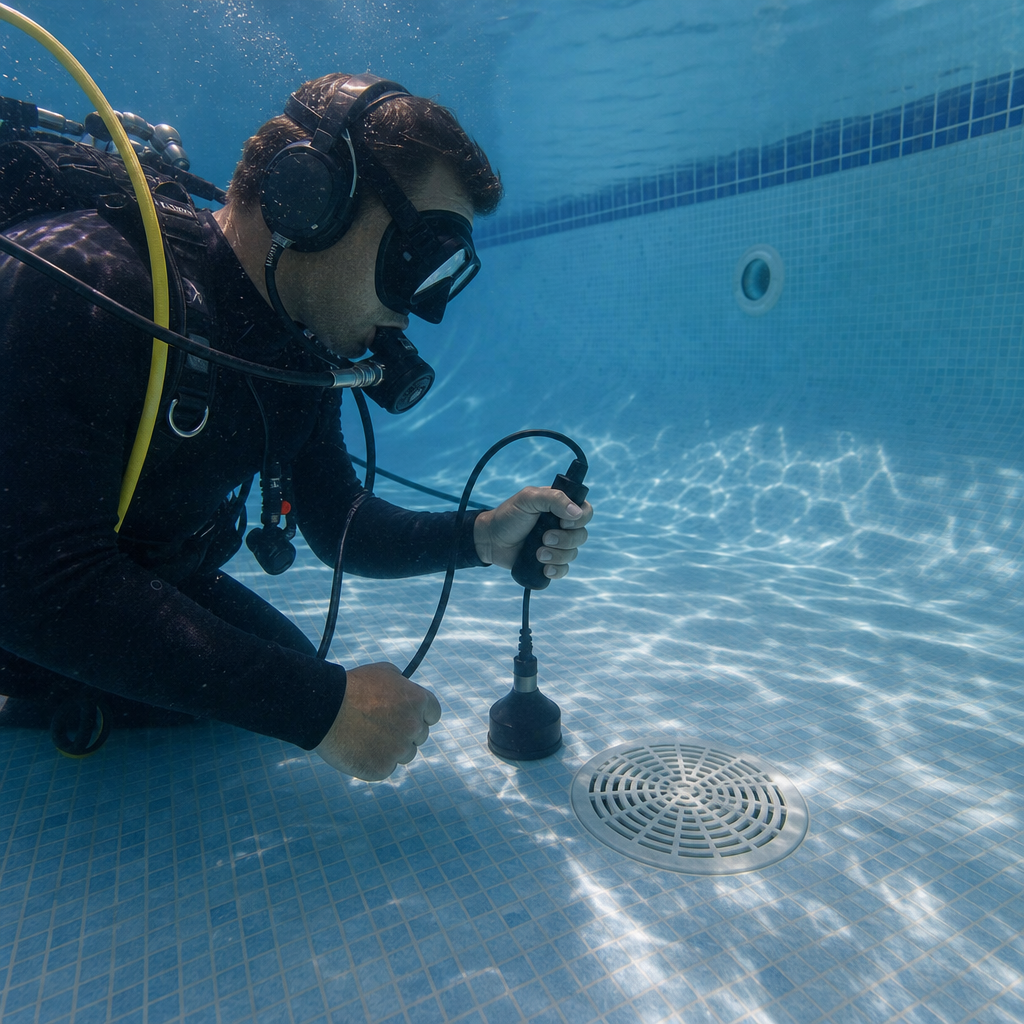
Pool leak detection is a diagnostic visit that answers two questions with evidence: is your pool actually leaking, and exactly where? In Port St. Lucie the visit is a flat $250–$550 (pressure testing of every plumbing line, dye and electronic inspection of the shell and fittings, and written findings) with any repair quoted separately afterward. You approve the repair before anything is cut, dug, or drained.
That separation matters more than any piece of equipment. A “free leak detection” offer is a repair sales call with a dye bottle; the finder needs to find something expensive. A flat, standalone detection fee means the honest answer (including “this is evaporation, your pool is fine”) pays the same as any other. That’s the deal, and it’s why a stand-alone report is worth taking to any contractor you like. It’s also what keeps detection affordable in the way that actually matters: one known fee against months of billed water loss and the speculative deck-cutting a guess invites.
Is it a leak? Do this before you book
Florida summer evaporation is genuinely confusing. An uncovered Port St. Lucie pool can lose up to a quarter inch a day in July, one to two inches a week, and that’s weather, not a leak. Screened lanais, which most pools here live under, cut that further. The dividing line: consistently losing more than about two inches a week means a likely leak.
The 24-hour bucket test settles it for free, and it’s worth running first: bucket of pool water on the second step, mark the level inside and outside, autofill off, wait 24 hours. Pool dropped more than the bucket? Leak. Same drop? Evaporation. Full steps are on the FAQ page. Run it once with the pump on and once with it off. That single comparison already tells us whether to suspect pressure-side plumbing or the shell and suction side, and it makes your detection visit faster.
One Port St. Lucie-specific warning: if your pool has an autofill valve, the water level tells you nothing. The valve replaces whatever the leak loses, so the level sits rock-steady while the leak runs for months. Autofill pools announce their leaks through the water bill, and on the city’s inclining tier rates, with sewer billed on the same meter, that announcement is expensive. Bill jumped? Autofill pool? Book the test.
How pool leaks are found: the actual method
Step 1: Verify the loss. It starts with your numbers: bucket test results, bills, how fast the level drops with the equipment on versus off. This shows where to look first and confirms there’s something to find. If your data says evaporation, you should hear that.
Step 2: Pressure-test the plumbing, line by line. Each circuit (skimmer, main drain, returns, spa, cleaner line) gets plugged and pressurized individually at roughly 20 PSI. A sound line holds pressure; a compromised one bleeds down. This is how a leak gets isolated to one specific pipe run out of the half-dozen buried under your deck. When a line fails the test, acoustic listening equipment traces the pressurized escape noise through the deck and pinpoints the break, typically to within inches, which is the difference between one clean cut and exploratory demolition. What happens after that is the plumbing repair, quoted separately.
Step 3: Test the pool itself, in the water. A technician inspects the shell directly, scuba on deep pools, working dye at every place gunite pools actually fail: the skimmer throat (the number-one leak point on Florida pools, see skimmer leak repair), return and cleaner fittings, the light niche and conduit (a classic slow drainer, see pool light leak repair), the tile line, the main drain, and any visible cracks. Dye pulled into a gap marks the leak visually. Electronic leak detection complements the dye by tracing electrical current escaping through the breach in the shell.
Step 4: Check the Florida fitting everyone forgets. Treasure Coast gunite pools are built with a hydrostatic relief valve in the main drain sump, because the water table here runs high enough to lift an empty shell out of the ground. When that valve fails or fouls with sand, it leaks, and out-of-state leak advice never mentions it. Ask for it to be checked on any visit.
Step 5: Written findings and a separate repair quote. You get what was tested, what was found, and what was ruled out, in writing, plus an itemized repair quote per the published pricing. Accept it, sit on it, or shop it. The diagnosis is yours either way.
Why Port St. Lucie pools leak so much
The local pool stock is hitting its leak years from two directions. Pools built during the mid-2000s boom, St. Lucie West, Torino, the eastern GDC-platted neighborhoods: are now 15 to 25 years old, prime age for skimmer joints to separate, light conduits to lose their seal, and original plumbing to fail at fittings. Meanwhile the 2020s wave in Tradition, Verano, and the infill lots is reaching the 5–10 year mark, where plumbing settles into sandy backfill and the first fitting stresses show, often masked from day one by a factory-installed autofill.
Under all of it: fine coastal sand that doesn’t hold trench compaction forever, a high water table, and salt chlorination systems whose drifting salinity is often the first measurable leak symptom an owner sees. (Adding salt bags more often than usual? That’s dilution from fill water. A leak tell, not a salt system fault.)
What nobody should promise
Most leaks are found and documented in one visit. Not all, pools can have more than one leak, and intermittent leaks that only open under pump pressure or at certain water levels sometimes need a follow-up under different conditions. Any company that guarantees single-visit success on every pool is writing marketing, not diagnostics. Expect to hear where things stand, what’s been ruled out, and what the next step costs, before you spend another dollar.
Book the visit
We cover all of Port St. Lucie plus Fort Pierce, Jensen Beach, Stuart, and Palm City, year-round. Share what you’re seeing (inches per week, a bill jump, bubbles at the returns, a wet spot in the lawn) and the flat detection fee is confirmed before anyone comes out. Ask anyone you hire, us included, to show proof of insurance. If the numbers say evaporation, that’s the answer you should get instead.
Frequently Asked Questions
What exactly does the detection visit include?
Water-loss verification, individual pressure testing of every plumbing line at roughly 20 PSI, acoustic pinpointing of any underground break, in-water dye and electronic testing of the skimmer, fittings, light niche, tile line, and shell, a hydrostatic relief valve check, and a written report. Flat fee, $250–$550 depending on pool complexity.
Should I do anything before the visit?
Yes, turn off your autofill valve 24–48 hours ahead so the true loss rate shows, and run the bucket test if you can. Have the pool at normal level, the equipment accessible, and know where your pump timer is. If the bucket test says evaporation, say so; cancelling a visit beats paying for one you don't need.
Can you find a leak under my concrete deck without cutting it?
It can be found: pinpointing is exactly what pressure testing plus acoustic listening does, usually to within inches, through the deck. Repairing it may require a small deck cut at that pinpointed spot, which is quoted separately. The point of detection is that one accurate cut replaces exploratory demolition.
What if my pool is losing water but every test comes back clean?
It's rare, but it happens with intermittent leaks: ones that only open under pump pressure, at certain temperatures, or at certain water levels. You should be told exactly what was ruled out (which has real value, it narrows the problem) and what a follow-up test under different conditions would cost. An honest tech never invents a finding to close the ticket.
Do you test spas and water features too?
Yes. Attached spas, spillovers, waterfalls, bubblers, and deck jets are all plumbing circuits that can leak, and spillover spas are frequent offenders. Each extra circuit adds testing time, which is why pool-spa-feature combos price at the top of the $250–$550 range.